
Indian equity benchmarks Sensex and Nifty surged nearly 1 per cent, driven by strong earnings reports from FMCG and auto sectors, alongside a rally in Asian markets and signs of de-escalation in geopolitical tensions.

'Every year we import approximately $70 billion worth of gold -- closer to $72 billion in 2025-2026, an all-time record.' 'There is no parallel for this anywhere in the world. And this love for gold will not disappear overnight.'

According to figures from the Ministry of Petroleum, foreign exchange earnings from the petroleum sector stood at more than $11 billion in the first six months (April-September) of the current financial year. In the last fiscal, it was $9.1 billion.

The Reserve Bank of India (RBI) has announced a record surplus transfer of Rs 2.87 trillion to the central government for FY26, driven by increased income and an expanded balance sheet, despite a reduction in the contingent risk buffer (CRB) to 6.5 per cent.


Indian stock markets are poised for volatility this week, driven primarily by the outcomes of five state assembly elections, ongoing high crude oil prices amid West Asia tensions, and the release of Q4 corporate earnings, according to market analysts.

'In all these years of rupee depreciation, of rising oil prices, of inflation caused by import dependence, not one leader had the courage to look the people in the eye and say: Please do this for your country.'

The Narcotics Control Bureau (NCB) has secured the conviction of five individuals involved in a major synthetic drug trafficking case in Mumbai, and has seized assets worth over Rs 6.5 crore linked to the illegal trade.
The Enforcement Directorate (ED) reports a decline in traditional financial crimes due to sustained investigative actions and government initiatives, while highlighting emerging challenges like cryptocurrency fraud and terror financing.

'At the first sign of real trouble, that money will move. There will be a run.'

'Once the currency goes out of the hand, then possibly your major challenge is that it will not come back.'

The Enforcement Directorate (ED) has attached properties worth Rs 1.06 crore in connection with the 'Global Media App' fraud, an online earning platform that allegedly generated over Rs 45 crore through illicit means.

Indian benchmark indices, Sensex and Nifty, closed marginally higher after a volatile trading session, driven by value buying in IT and select blue-chip counters, despite global crude price hikes and a weak rupee.

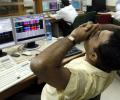
Indian equity markets, including the Sensex and Nifty, experienced a significant downturn for the second consecutive day, driven by escalating geopolitical tensions in West Asia and persistent foreign fund outflows.

Indian banks are urging the Reserve Bank of India (RBI) to reconsider its new $100 million cap on net open foreign-exchange positions, warning that the directive could lead to significant mark-to-market (MTM) losses and force an accelerated unwinding of trades, potentially impacting FY26 earnings.

Indian benchmark indices Sensex and Nifty closed higher, with the Sensex climbing 355.90 points, driven by positive state election results and better-than-expected Q4 earnings, despite ongoing geopolitical concerns.

Indian benchmark indices Sensex and Nifty experienced a decline due to renewed geopolitical concerns in the Strait of Hormuz, a strained US-Iran ceasefire, and the rupee hitting a record low against the US dollar.

Inflation data, trading activity of foreign investors and global trends would dictate sentiment in the stock market this week, according to analysts.

Indian benchmark equity indices, Sensex and Nifty, experienced a decline in early trade, ending a three-day rally, primarily due to heavy selling in IT stocks and concerns over prolonged instability in West Asia.

Indian companies are increasingly turning to share buybacks as a preferred payout strategy, driven by recent tax framework changes that make them more tax-efficient for non-promoter shareholders and a fall in stock prices.

Indian benchmark equity indices, Sensex and Nifty, closed lower due to investor caution over rising bond yields, a weaker rupee, and fresh fuel price hikes, which have revived inflation concerns.

Himanta Biswa Sarma's return as Assam's Chief Minister underscores the BJP's increasing dominance in the northeast, marked by both development and divisive policies.

Notorious drug trafficker Mohammad Salim Dola, a close aide of fugitive gangster Dawood Ibrahim, has been remanded in the Narcotics Control Bureau's custody until May 8 in connection with a 2023 drugs seizure case.
Indian benchmark equity indices, Sensex and Nifty, snapped a three-day rally, tumbling nearly 1 per cent due to heavy selling in IT stocks, a jump in crude oil prices, foreign fund outflows, and fears of prolonged instability in West Asia.

Moody's Ratings has downgraded India's growth forecast for financial year 2026-27 (FY27) to 6 per cent from 6.8 per cent, attributing the revision to weaker consumption and industrial activity, elevated energy prices, and rising input costs stemming from the West Asia conflict.

India possesses two months of fuel stockpiles and faces no supply concerns despite global energy disruptions, according to Oil Minister Hardeep Singh Puri. However, state-run fuel retailers are incurring losses of up to Rs 1 lakh crore in a single quarter due to elevated crude prices and unchanged retail fuel prices, raising questions about the sustainability of these losses.

Indian benchmark indices Sensex and Nifty experienced declines due to a sharp rally in crude oil prices, continuous foreign fund outflows, and geopolitical uncertainties. Regulatory developments in the banking sector, particularly the implementation of the Expected Credit Loss (ECL) framework, also contributed to the selling pressure.

Indian equity benchmark indices Sensex and Nifty tumbled over 1 per cent for the third consecutive day, driven by a sharp rally in crude oil prices, massive selling in IT stocks, and unabated foreign fund outflows amid ongoing geopolitical tensions in the Middle East.

The Reserve Bank of India on Friday proposed to allow banks to lend to Real Estate Investment Trusts (REITs) with certain prudential safeguards to deepen the financing pool for the real estate sector.

Stock markets are likely to trade in a range-bound manner in a holiday-shortened week where trading activity of foreign investors, currency movement and global macroeconomic data announcements are expected to drive sentiments, analysts said. Several global markets may see subdued activity on account of Christmas and New Year holidays, an expert said.

Analysts predict that the ongoing conflict in West Asia, crude oil price fluctuations, and the US Federal Reserve's interest rate decision will significantly influence the Indian equity market this week.

India earned over Rs 3.22 lakh crore (Rs 3.22 trillion) worth of foreign exchange through tourism.

IndiGo airline will face near-term pressure on profitability from rising fuel prices following the escalation of conflict in West Asia, though it is likely to pass on higher costs to passengers over time because its ticket booking cycle is relatively short, according to a report by Moody's Ratings.

Domestic institutional investors, on the other hand, made a net investment of Rs 1.13 trillion during this period.

Analysts predict continued volatility in Indian equity markets due to domestic macroeconomic data, F&O expiry, global developments including US tariff policies, and geopolitical tensions.

Macroeconomic data, global geopolitical developments and rising concerns over AI-related disruptions are likely to dictate sentiment in the stock market next week, even as investors may remain cautious amid ongoing volatility, according to analysts.
From the 30-Sensex firms, Trent, Larsen & Toubro, Reliance Industries, InterGlobe Aviation, Maruti, ITC, Adani Ports and Bharat Electronics were among the biggest laggards. In contrast, Eternal, ICICI Bank, Tech Mahindra, State Bank of India and Tata Consultancy Services were among the gainers.
'We are profoundly energy-dependent on the Gulf. That dependency must now be redirected towards the United States, because we require American permission to procure oil.' 'We additionally require Iranian permission to acquire oil from that source. So India now has to seek two separate permissions merely to secure its energy supply.' 'Should we be compelled to source from America, or from Venezuela -- which is, in effect, American-controlled supply -- that will inevitably carry a price premium, an elevated shipping cost, and a considerably extended delivery timeline, given the distances involved.'

There is record underperformance and under-ownership. Some of this is cyclical and will turn on its own. However, we also need to regain our growth credentials. For this, both the government and companies have a role to play, as do investors, points out Akash Prakash.

Ravindra Metkar, a farmer from Maharashtra who built a successful poultry business from humble beginnings, has been invited to speak at the University of Oxford's Global Research Conference.
 © 2026 Rediff.com - Advertise with us - Disclaimer - Privacy Policy - Sitemap - Feedback - About us - Terms of use - Grievances